How To Build A Vision Board That Gets Results

Captured by: Eve Gagne
Hey friend—welcome back to The Glow Up Year.
I’m Meg: actress, model, and mindset coach for actors, here to give you the behind-the-scenes truth about building a meaningful acting career… without losing yourself in the process.
Around here, we talk about the real stuff: the highs, the heartbreaks, the rewrites, the curveballs, and the quiet choices that build momentum when nobody’s watching.
And today? We’re kicking off the year with something that sounds simple… but can actually change everything: how you vision into the next 12 months.
(Also: we have reader questions in this episode—so you’re not just getting my inner monologue and a glue stick. We’re getting practical.)
Farewell to 2025
2025 felt like a quantum leap year for me.
Not in the flashy, overnight-success way people love to post about—but in the quieter, more meaningful way where your purpose finally catches up to your passion and you think, Oh. This is what alignment feels like.
And now? I’m passing the baton.
Because I have a feeling—no, a knowing—that 2026 is about to be your glow-up year.
I said it. Out loud. On purpose.
But before we sprint into vision boards and goal-setting and “new year, new me” energy, let’s slow this down for a second. Because the way you vision your next year—especially as an actor—matters.
A Look Back (Before We Look Forward)
When I look at 2025 honestly, what stands out isn’t just what I booked or built—it’s how I showed up.
I created more than I consumed.
I updated my marketing materials instead of putting it off, again.
I took a step back from hustle culture and learned how to regulate my nervous system instead of white-knuckling my way through burnout.
I started coaching amazing actors just like you—and watched that work light something up in me I didn’t know was missing.
It was the year where things finally stopped feeling scattered and started feeling intentional.
Which brings us to the question we all quietly ask ourselves around this time:
How do I make next year different—in a way that actually sticks?
Why Vision Boards Work (When You Use Them Right)
Here’s the thing about vision boards: they’re not magic. They’re mirrors.
A good vision board forces you to sit down and ask questions most of us avoid because they require honesty:
What did I like about last year?
What drained me?
What do I actually want more of?
What am I ready to let go of—even if it’s scary?
It’s not just about manifesting more bookings or money or opportunities. It’s about deciding who you’re becoming while you pursue them.
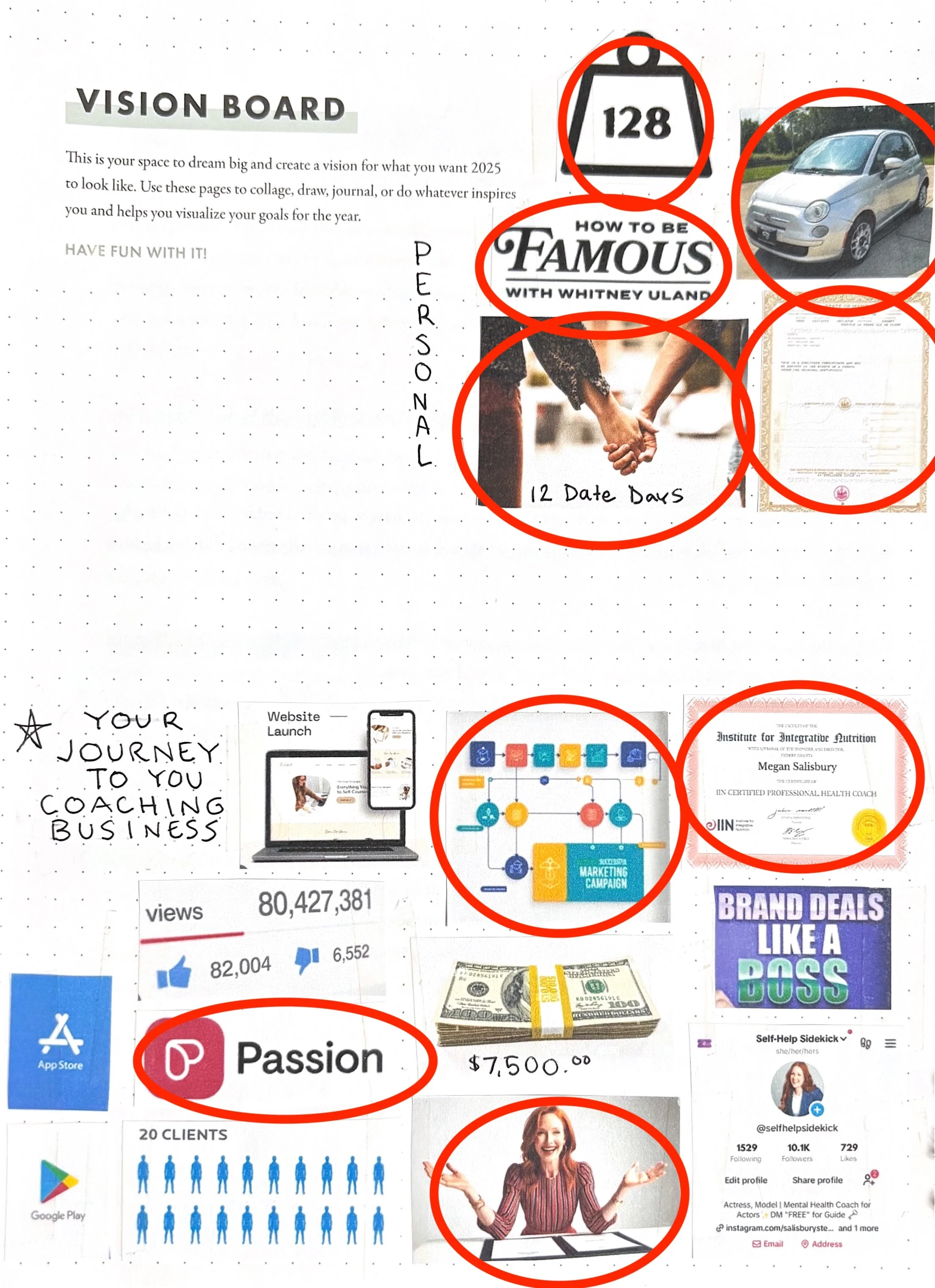
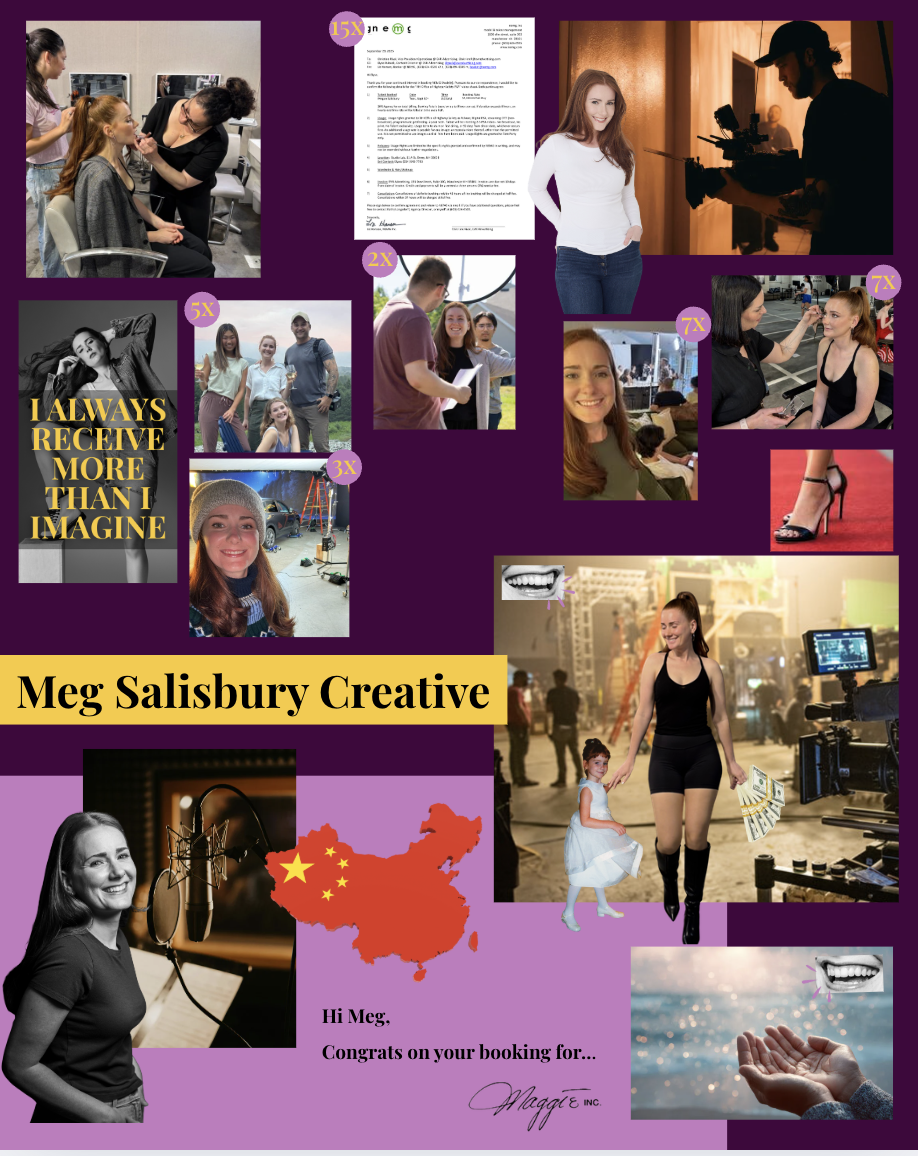
Last year, my vision board was simple. Sparse, even. But look at all the incredible results that manifested (circled in red).
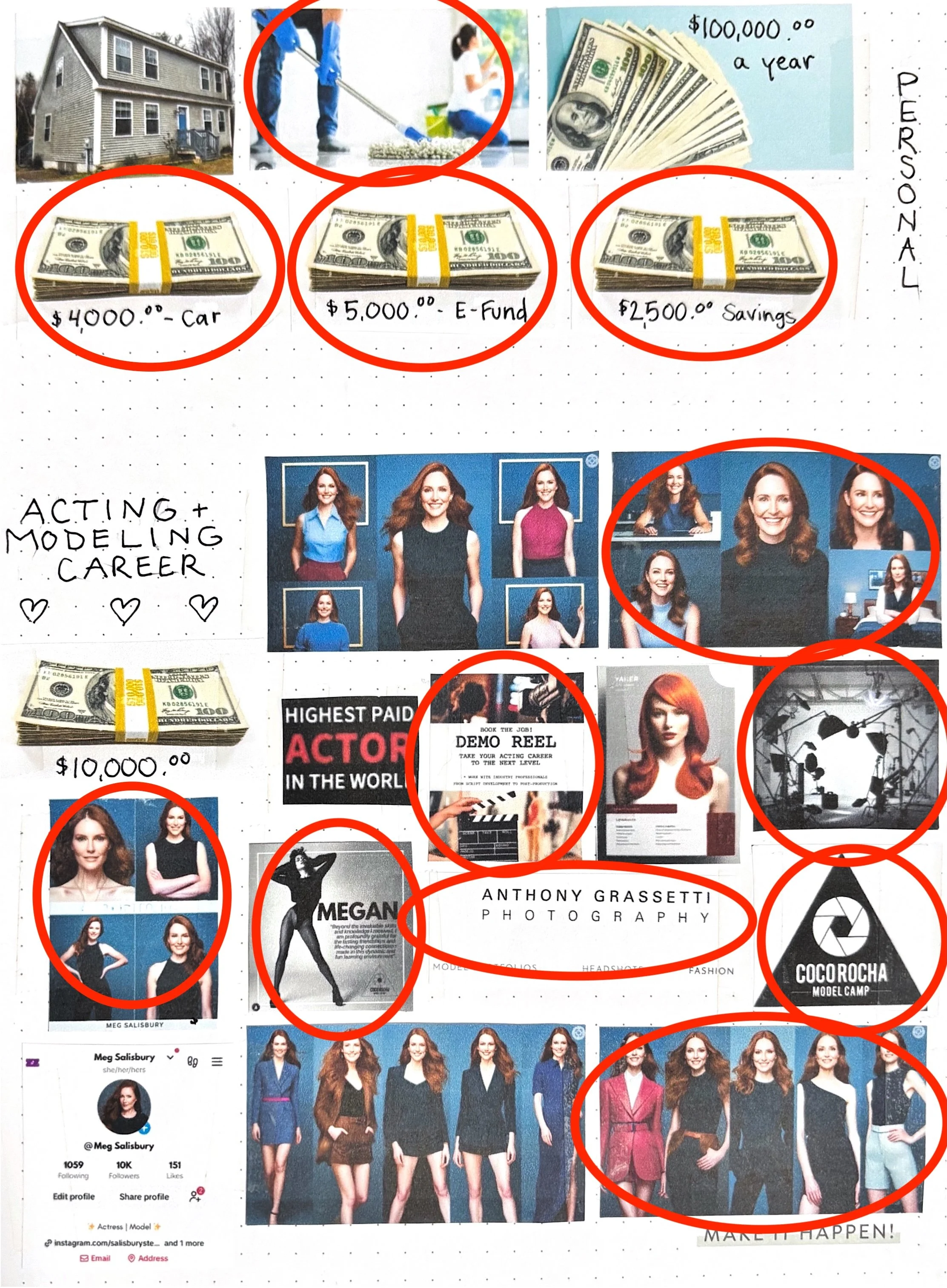
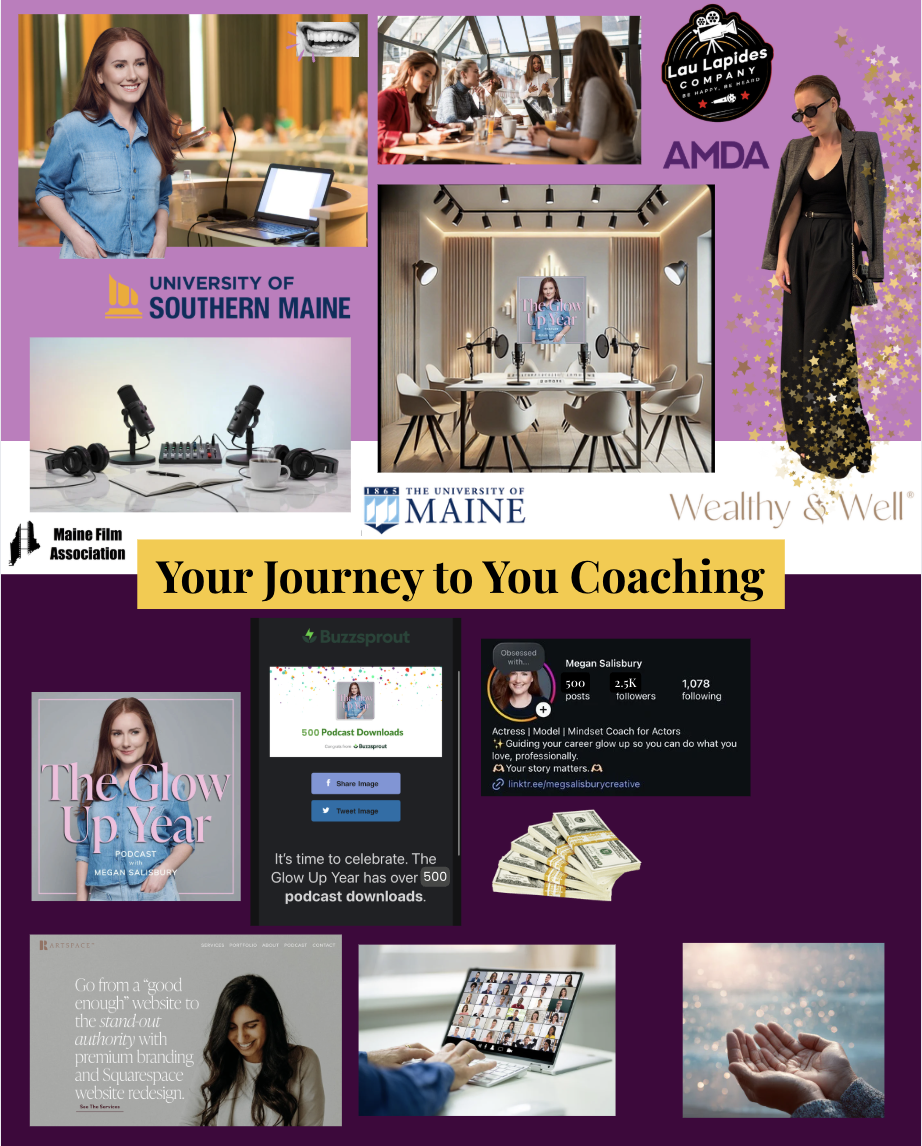
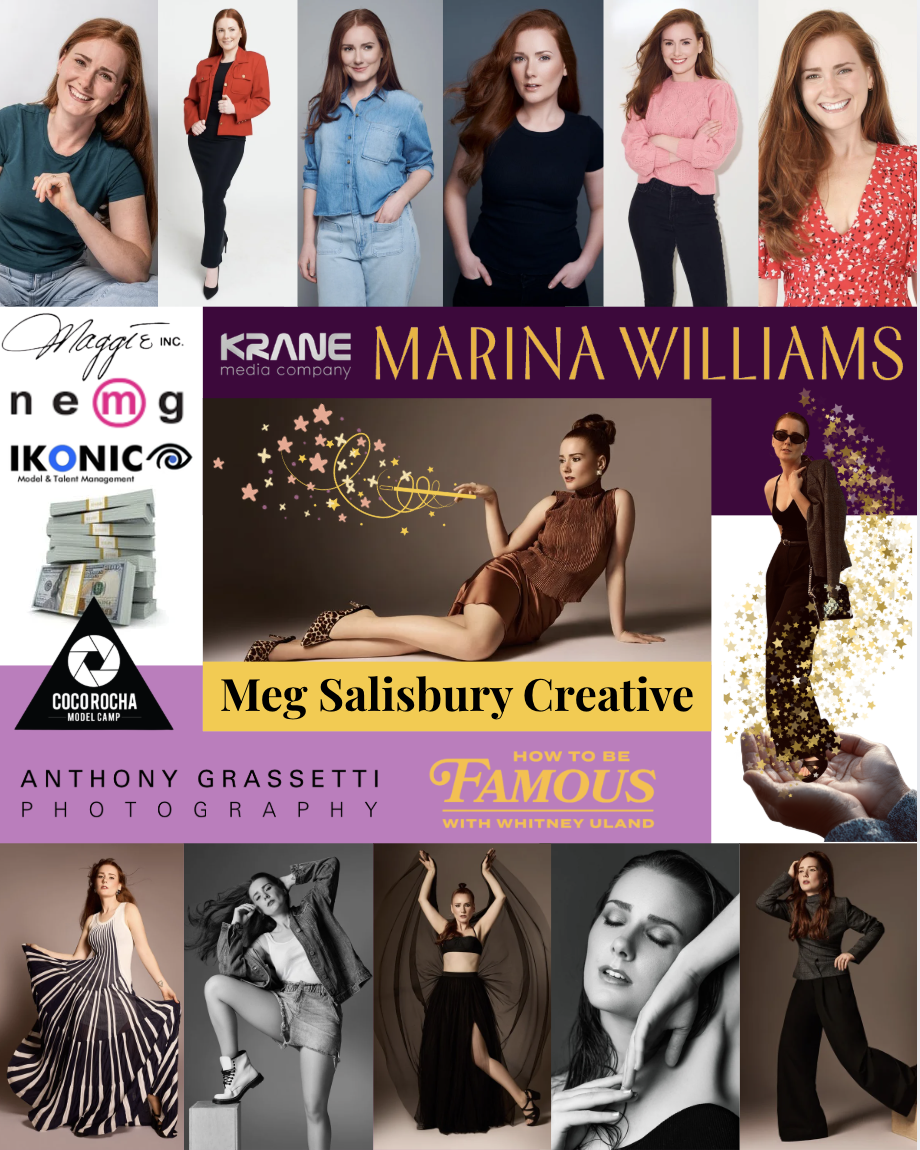
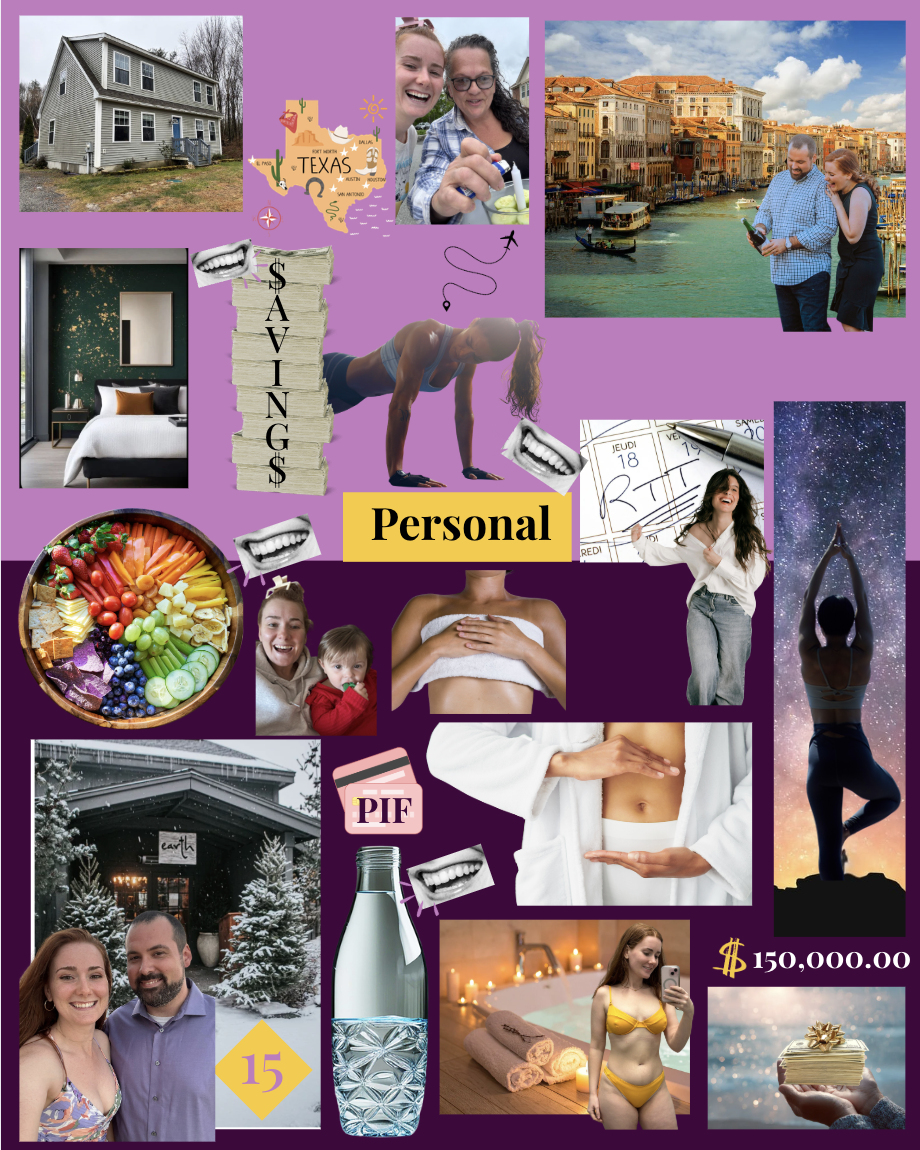
This year my vision board expanded—because I expanded. Not just in goals, but in capacity, clarity and connection. Here’s what I’m hoping to manifest in 2026.
How I Build Vision Boards (Without Stressing Myself Out)
I’ve created vision boards both ways: physical and digital.
Last year, I printed images and glued them into my planner. This year, I designed mine digitally (shoutout to Canva, not sponsored, but open to a brand deal pretty please).
Here’s the most IMPORTANT rule I follow:
Your vision board should never activate lack.
If something feels heavy, desperate, or “ugh” in your body—it doesn’t belong.
For example:
If you want to pay off some debt, instead of putting “debt” on your board, you might use language like Paid in Full.
Instead of “I want more work,” you might choose images that reflect being on set, collaborating, receiving.
The universe (of whatever you believe in) is always listening.
What Changed This Year (And Why That Matters for Your Acting Career)
One thing that stood out to me when comparing this year’s board to last year’s?
Last year, I used AI images of myself doing things I hoped to do.
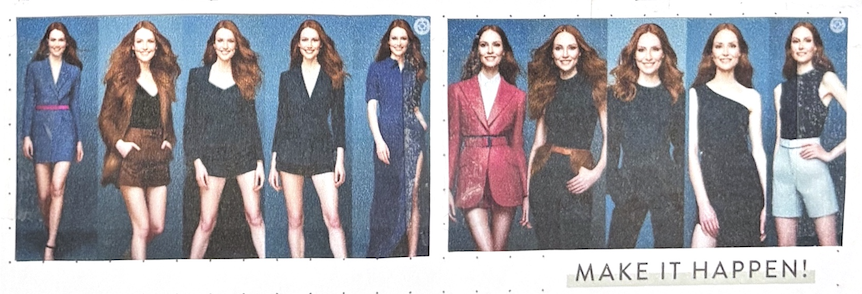
This year? Almost all the images came from things that actually manifested. That shift is huge!
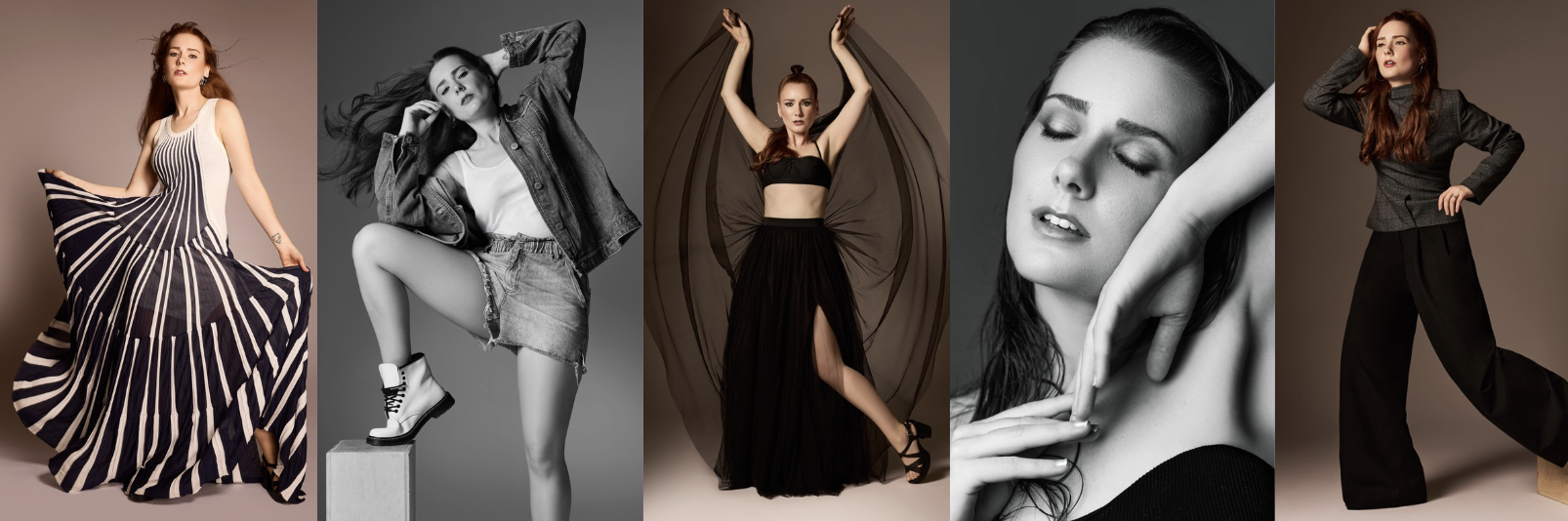
Confidence doesn’t come from fantasizing harder—it comes from proving to yourself, over and over, that you follow through.
Which is why this year’s boards weren’t just about acting or modeling or business—they were about receiving, rest, play, and trust.
Yes, I still want to walk red carpets and book meaningful work. But I also want to enjoy the person I’m being (or becoming) while I do it.
Listener Questions (Because You’re Not Alone in This)
In this blog post, one of you asked questions that I know so many actors are wondering right now—especially in January when the motivation is high and the follow-through is… mysterious.
Here’s what we’re answering:
1) Should your vision board be physical or digital?
2) How do you build a vision board that’s actually achievable—not just pretty?
3) How do you keep the momentum going all year once the “new year energy” wears off?
Let’s break it down.
Physical vs Digital: Which One Works Best?
Here’s my honest answer: vision boards are bio-individual. Which means, what works best for me might not work for you, like at all…
The most important part of a vision board is: you need to see it often.
So if you’re someone who’s on your phone constantly (no shame), a digital vision board that becomes your lock screen might be perfect.
But if you’re more kinesthetic—if you learn through doing—then cutting, pasting, and physically creating the board might help your nervous system attune to your goal easier. If your body gets involved it becomes less “idea” and more “experience.”
And yes, you can do both. You can have one on your wall and one on your phone. You can be wildly extra. I support it.
How to Make a Vision Board You Can Actually Follow
This is the part where we gently step away from “highest paid actor in the world by March” energy. Ask me how I know.
There’s a difference between being expansive and being unintentionally cruel to yourself.
If your vision board is filled with goals that are ten years ahead of where you are right now, your nervous system doesn’t feel inspired—it feels threatened. And a threatened nervous system doesn’t create art. It creates avoidance, procrastination, and sudden urges to reorganize your sock drawer instead of sending the email you need to send.
So instead, build a board that includes:
Goals that stretch you
Goals that are achievable in the next 3–12 months
Visuals that match the feeling you want to live in
Think: big picture energy, small-step strategy.
The Difference Between Motivation and Momentum
This matters so much, and honestly, it’s one of the biggest reasons actors feel like they “start strong” every year… and then spiral by February.
Motivation is that fresh, sparkly surge of energy you get when you watch an inspiring video, buy a new planner, or decide that this is the year you finally stop playing small. Motivation is emotional. It’s a burst. It’s powerful… and it’s unreliable. It comes and goes based on sleep, stress, hormones, rejection, the weather, and whether or not you just watched someone else book the role you wanted and now you’re lying on the floor staring at the ceiling.
Momentum, on the other hand, is not a spark—it’s an engine. Momentum is what happens when you take small actions consistently enough that they start to feel normal. Not dramatic. Not heroic. Just… part of who you are.
And here’s why that matters for your acting career:
This industry will test your motivation constantly. You can be deeply talented and still face long stretches of silence. If your entire system depends on motivation to keep going, you’ll keep restarting your career every time you feel discouraged.
Momentum is what keeps you going when you’re not inspired.
It looks like:
Submitting even when you’re tired
Rehearsing even when nobody claps
Updating your materials in a slow season
Taking the class because you’re building craft, not chasing validation
Doing the small thing today so future-you isn’t panicking tomorrow
Momentum doesn’t require you to feel confident first.
It builds confidence through evidence.
And when actors say, “I just want my career to finally pick up,” what they often really mean is:
“I want to stop feeling like I’m starting over every time life gets hard.”
That’s momentum. That’s the glow-up.
How Do You Keep the Momentum Going All Year Once the “New Year Energy” Wears Off?
Once your vision board is done, here’s what I suggest:
Pick two or three goals for the first quarter. Break them down into micro-actions—and I mean micro.
If your goal is new headshots, micro-actions might be:
Research photographers
Email one photographer
Pick a date
Plan outfits
Schedule hair/makeup
Once you have listed out your micro-actions then:
Set deadlines / reminders
Use an accountability buddy
Reflect at the end of the quarter on what worked and what didn’t
Adjust for the next quarter without self-judgment
Repeat for quarter two.
And most importantly: celebrate.
As often and consistently as you can because celebration teaches your brain, this is working. And a brain that believes it’s working keeps expanding.
Want more grounded guidance like this?
My weekly newsletter is where we talk momentum (not hustle), mindset, and building an acting career that actually supports your life—not drains it.
Your One Actionable Step This Week
Yes, I’m going to say it and you’re going to be like duh.
Create a vision board!
And if that feels like too much for this season of life? Sit down and ask yourself:
What do I actually want from 2026—and who do I need to become to receive it?
That question alone will move you forward.
If You Want to Start the Year Differently (Not Just Hopefully)
If you’re reading this and thinking, “Okay… I don’t want to do this year the same way I’ve done every other year,” I want you to know something:
You don’t have to figure this out alone. If you really want to start the new year right—not just motivated for a week, but supported in a way that actually creates momentum—this is exactly why I created my 6-Week 1:1 Coaching Program.
This isn’t about hyping you up or telling you to “just believe harder.” It’s about building a foundation that can actually hold the career you want.
Inside this six weeks, we work together to:
Regulate your nervous system so auditions, uncertainty, and visibility don’t send you into fight-or-flight
Identify and dismantle the sneaky habits and subconscious patterns that keep you stuck or second-guessing yourself
Shift the beliefs that quietly sabotage your confidence before you even walk into the room
Create clear, realistic momentum so you’re not starting over every few months
Help you feel grounded, capable, and self-led in your acting career
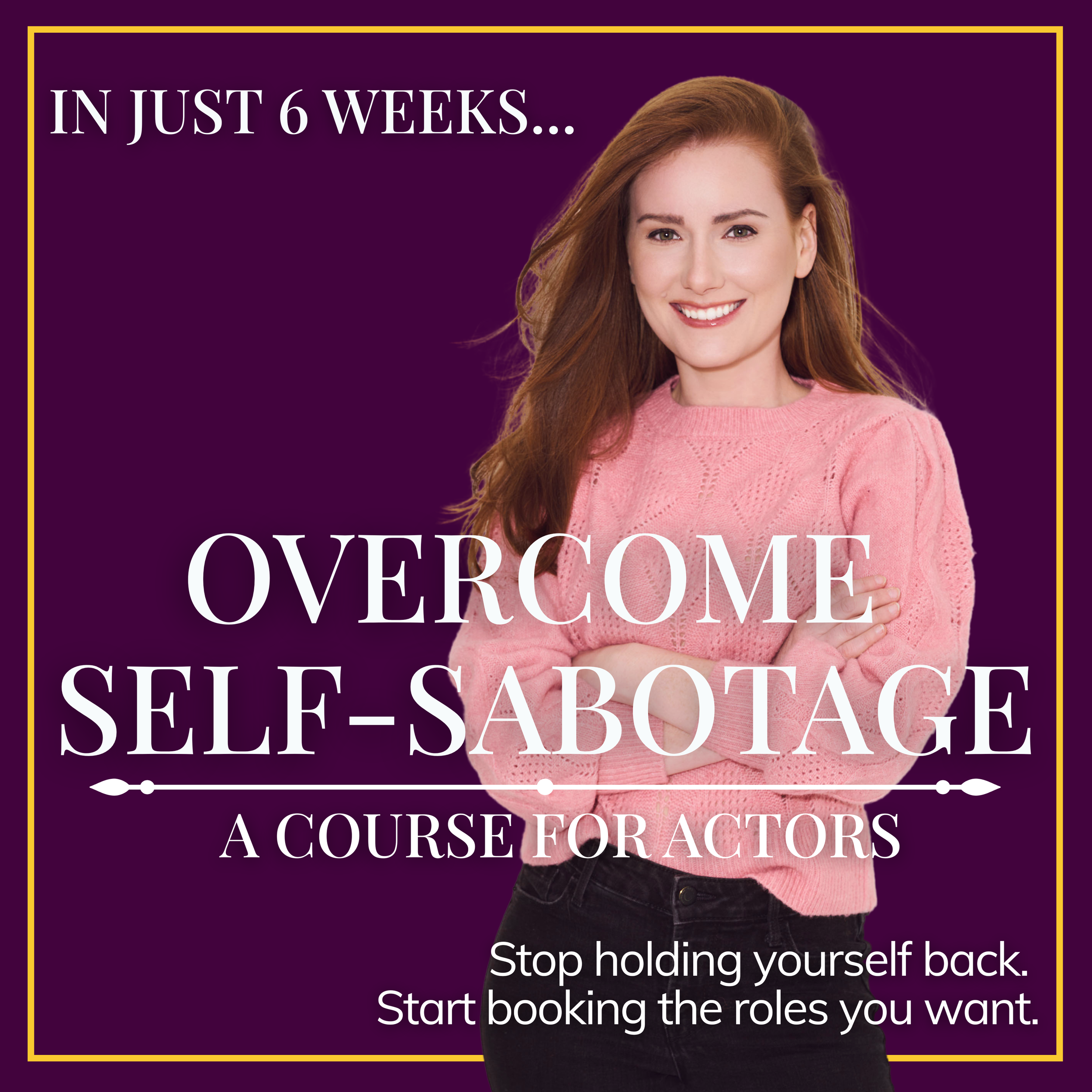
You’ll also receive access to my Overcoming Self-Sabotage course, ongoing voxer support between sessions, personalized guidance that’s tailored to you—your nervous system, your goals, your season, and so much more.
This offer is for the actor who knows they’re talented… but feels like something keeps getting in the way.
The actor who’s tired of white-knuckling their way through another year.
The actor who’s ready to build a career that feels sustainable—not just impressive on paper.
If that’s you, I’d love to talk.
You can reach out, tell me where you’re at, and we’ll see if it’s a good fit. No pressure—just an honest conversation about what support would actually serve you right now.
Your glow-up doesn’t come from pushing harder. It comes from being supported while you grow.
If you’re ready to stop starting over every year, 1:1 coaching is where we turn clarity into momentum. Together, we’ll regulate your nervous system, untangle self-sabotage, and build a career that feels sustainable—not stressful.
Want to listen to my How to Build a Vision Board That Gets Results tune into the podcast episode below.
Until next time, keep dreaming bigger, keep putting yourself out there, and remember—your next role might be closer than you think.
And if this is the year you finally let yourself have that?
I’ll be right here, cheering you on.